
• Menu
  • Skip to right header navigation
  • Skip to main content
  • Skip to primary sidebar

WASART

Washington State Animal Response Team

Header Right

Washington State Animal Response Team
Emergency Phone: 425-681-5498

DONATE

  • Home
  • WASART Stories
  • About
    • About WASART
    • WASART Board of Directors & Committee Chairs
    • Contact WASART
    • Frequently Asked Questions
    • Documentation
      • Board Meetings
      • Newsletters
      • Policies, Financials, and More
  • Volunteer
    • Volunteer: Learn More
    • Join the Team!
  • Training & Events
    • Training & Events Calendar
    • Registration
  • Resources
    • Login
    • Member Only Resources
      • Additional Resources
    • Public Resources
    • Responder Resiliency (Soon)
    • The WASART Store
  • Home
  • WASART Stories
  • About
    • About WASART
    • WASART Board of Directors & Committee Chairs
    • Contact WASART
    • Frequently Asked Questions
    • Documentation
      • Board Meetings
      • Newsletters
      • Policies, Financials, and More
  • Volunteer
    • Volunteer: Learn More
    • Join the Team!
  • Training & Events
    • Training & Events Calendar
    • Registration
  • Resources
    • Login
    • Member Only Resources
      • Additional Resources
    • Public Resources
    • Responder Resiliency (Soon)
    • The WASART Store

Header Right

Washington State Animal Response Team
Emergency Phone: 425-681-5498

DONATE

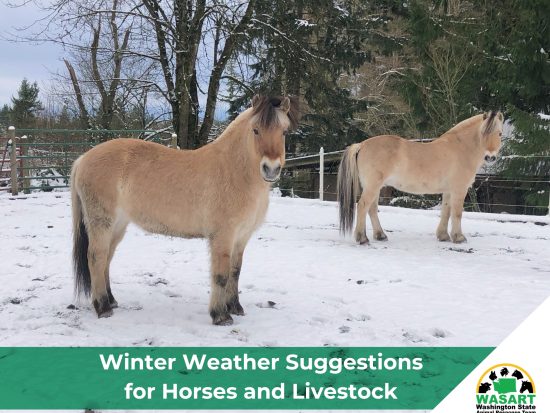
Winter Weather Suggestions for Horses & Livestock

Protecting animals from the cold, wind, and rain can prevent hypothermia, and other weather-related issues.

Shelter

  • Access to windbreaks and shelter will minimize cold stress. If animal is kept inside, ensure good air exchange while avoiding drafts for respiratory health.
  • Use bedding materials to provide insulation against the cold and absorb moisture effectively.
  • Pastured animals don’t need a blanket if they have a good winter hair coat, are healthy, and have adequate shelter.

Water

  • Ensure easy access to clean and unfrozen water for proper hydration, body condition maintenance, and avoiding colic. Check daily.
  • Water intake will increase as feed intake increases.
  • Use heated waterers, insulating water sources, provide warm water or at least break ice at regular intervals.
  • Water warmed to around 50 degrees F may increase animals’ water consumption, aid digestion, and prevent low-level dehydration.
  • Eating snow chills the body further and is not a suitable substitute for a clean water source.

Feed

  • Increase feed/forage to meet energy needs, maintain body temperature and body condition. This may be as high as twice their usual feed consumption.
  • Provide free choice salt and minerals.
  • Remember eating generates heat.

Other

  • Give extra attention to young, elderly, ill and poor body condition animals who may need a higher level of care to handle weather extremes.
  • Minimize exercise during extreme cold weather to prevent excessive sweating.
  • Check hooves for ice and snow buildup.
  • Mitigate slip hazards (for animals and yourself) with sand or wood chips, limit running and playing on hard unforgiving surfaces.
  • Frostbite can affect noses, ears and other parts of the body that become wet or damp in freezing temps.
  • Consult a veterinarian for specific dietary and healthcare requirements.

Primary Sidebar

Member & Customer Login

Coming Up

Monthly Technical Rescue Training

Training & Events Calendar

Pepper – Dog Fallen Down a Steep Hillside

Late in the afternoon on February 26, WASART received a call about a dog named Pepper who had fallen down a steep hillside near Mud Mountain. Our Technical Rescue Team and equipment truck deployed to the scene.

Social

  • Facebook
  • Instagram
  • Twitter
  • YouTube

Site Footer

HELPING ANIMALS AND THEIR OWNERS IN EMERGENCIES

WASART is a 501(c)(3) • PO Box 21 - Enumclaw, WA 98022 • info@wasart.org
Privacy Policy

Copyright © 2026