On July 6, we received a call about a Boer goat named Beau who had disappeared over the edge of a steep bluff behind his owner’s home on Whidbey Island. He had fallen approximately 45 feet down and was stranded on a ledge with a 75 foot drop and could not make it back to safety on his own. Our Technical Rescue Team and equipment truck deployed.
Using photos provided by Beau’s owner, we identified Beau’s most likely location and began setting up our technical rigging system. One of our rescuers rappelled over the edge to assess the situation.
Beau was found standing on one side of a fallen tree. Between the tree and the cliff wall was a narrow tunnel that Beau used to travel back and forth along a narrow ledge.
Beau was alert, nibbling vegetation, and appeared uninjured—but he was understandably wary of the unexpected visitor who had just appeared on his ledge.
We lowered food, water, treats, and rescue equipment to our rescuer. Beau happily accepted treats from his hand, but every time the rescuer tried to touch him or slip a rescue sling around him,
Beau would dart through the narrow tunnel to the other side. A few moments later, curiosity would get the better of him, and he’d quietly make his way back for another treat.
It quickly became clear this wasn’t a rescue that could be rushed. On a ledge only a couple of feet wide, with a 75-foot drop just beyond it, we couldn’t risk startling Beau into making a dangerous move.
After several attempts, we adapted our plan.
We built a second rope system and lowered another rescuer onto the opposite side of the fallen tree. With one rescuer on each side of Beau, we could safely limit his options while still allowing him to move at his own pace.
For nearly 30 minutes, our rescuers patiently earned Beau’s trust. They spoke softly, moved slowly, and offered treats until he became comfortable with their presence.
At one point, Beau darted onto an even narrower, more exposed section of the ledge. Rather than chasing him, our rescuers calmly repositioned themselves, allowing him to move back toward the safety of the tunnel, where food—and his rescuers—were waiting.
That patience paid off.
Working together, our two rescuers were finally able to safely secure Beau in a rescue harness and into the rope system.
Meanwhile, our Rescue Supervisor coordinated the operation from the beach below, providing another set of eyes on the rescuers and Beau while staying in communication with the team at the top of the bluff.
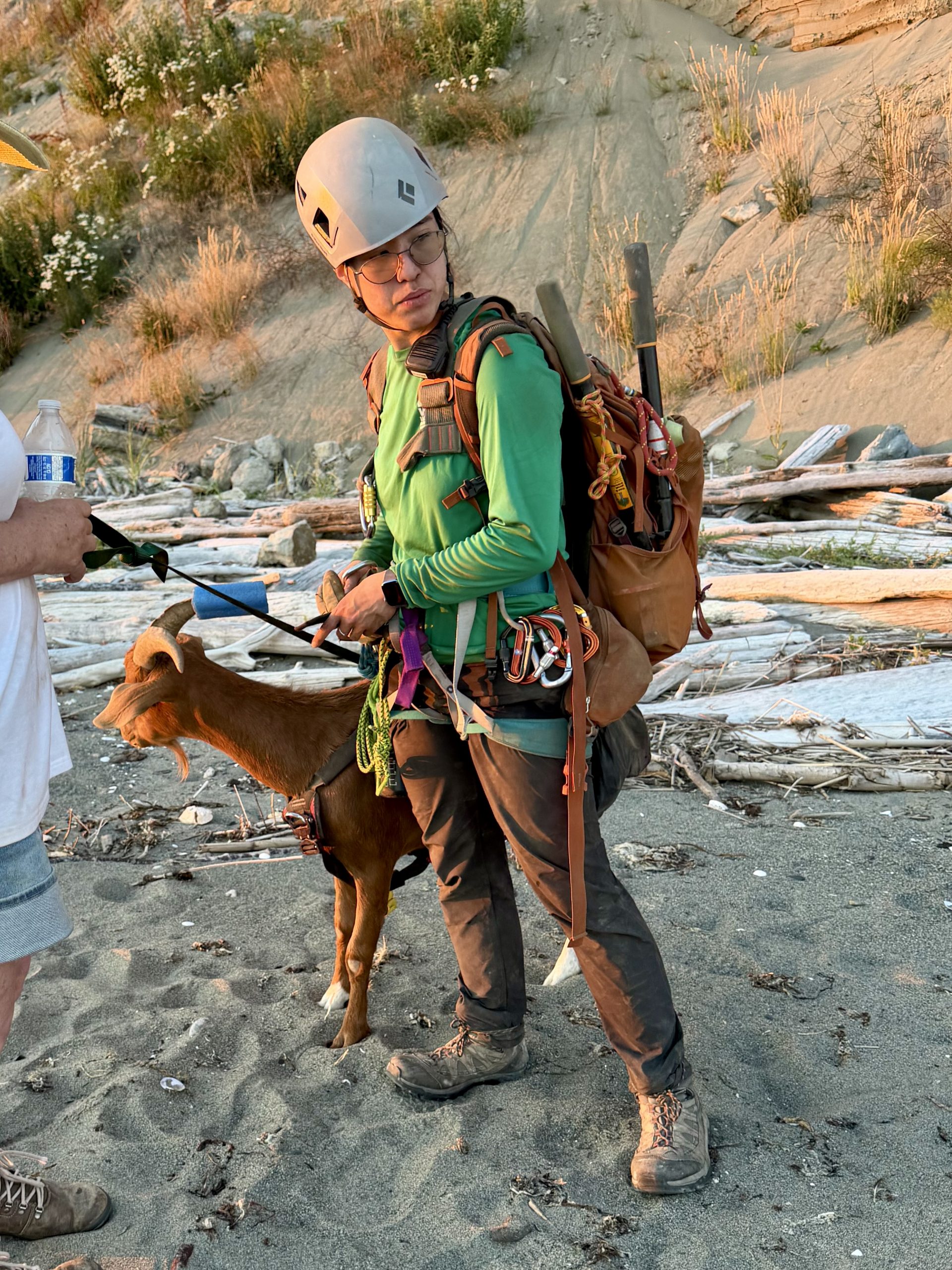
Normally, our goal would be to raise everyone back to the top of the bluff. But because the bluff had been undercut by erosion, as well as a lot of sandy soil, bringing two rescuers and Beau back over the lip would have been difficult. Instead, we chose to lower all three together, using a rope system, to the beach below.
His relieved owner was on the beach to meet him. We then walked him one half mile along the beach, then up a set of steps on the side of the bluff to an awaiting vehicle that would drive him back to home.
Every rescue presents its own challenges. In this case, success wasn’t just the result of technical rope rescue skills—it was the result of thoughtful planning, adaptability, teamwork, and taking the time to earn an animal’s trust.
Thank you to Beau’s owner for trusting us. We’re grateful for the opportunity to help, and even happier that Beau is safely back where he belongs.
WASART is an all-volunteer nonprofit organization. There is never a charge for our rescues.
 Happy – Horse Down in Her Stall on the 4th of July